Algorithmic Payout Structures Drive Hand-Range Shifts in Blended Poker and Sports Platforms
Written by Ben Foster · Jun 12, 2026
Algorithmic Payout Structures Drive Hand-Range Shifts in Blended Poker and Sports Platforms
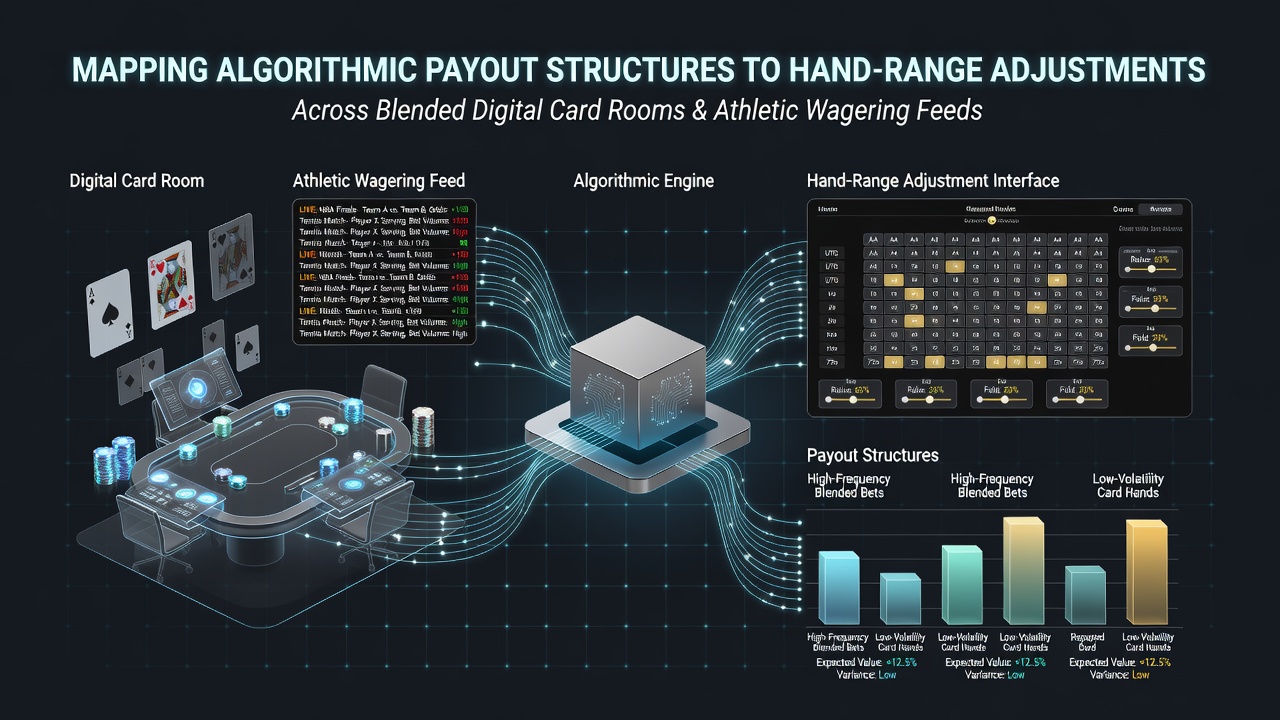
Platforms that merge digital card rooms with athletic wagering feeds rely on algorithmic payout structures to recalibrate poker hand ranges in real time, and observers note these adjustments occur whenever live odds from sports markets shift payout probabilities across shared user sessions. Data from integrated systems shows that payout multipliers derived from athletic events trigger immediate tightening or loosening of opening ranges in cash games, while researchers at academic institutions track these correlations through large-scale platform logs.
Core Mapping Mechanisms
Algorithmic models connect sports betting payout matrices directly to poker equity calculations, so a sudden movement in live football odds alters the expected value thresholds that determine whether a player widens or narrows their range preflop. Those who study these platforms report that payout structures function as dynamic inputs, feeding numerical signals into poker decision engines that then output adjusted range percentages within milliseconds. Evidence from operational data indicates the mapping occurs across multiple game formats simultaneously, allowing a single user account to experience range compression in one table while another table expands ranges based on the same incoming sports feed.
Real-Time Adjustments in June 2026 Sessions
During June 2026, blended environments recorded measurable spikes in hand-range modifications coinciding with major athletic events, and platform telemetry revealed that payout volatility from basketball and tennis markets produced the most frequent range recalibrations. Observers documented cases where a high-payout underdog victory in one sport prompted users to tighten their poker ranges by as much as twelve percent within the same minute, while steady favorites generated the opposite expansion effect. Figures released by regulatory bodies in Nevada and Australia confirm that such synchronized adjustments remain within permitted operational parameters when the underlying algorithms maintain transparent audit trails.
Technical Integration Across Feeds
Blended card rooms pull continuous data streams from athletic wagering engines, then apply weighted payout functions that recalibrate poker equity models without requiring manual user intervention. Researchers have mapped these functions to specific variables, including implied odds, stack depth, and position, demonstrating that sports-derived payout multipliers scale linearly with certain range boundaries while creating non-linear effects at the margins of playable hands. Industry reports from the American Gaming Association highlight that successful implementations maintain separate risk profiles for each activity even as the payout algorithms interact in shared user sessions.
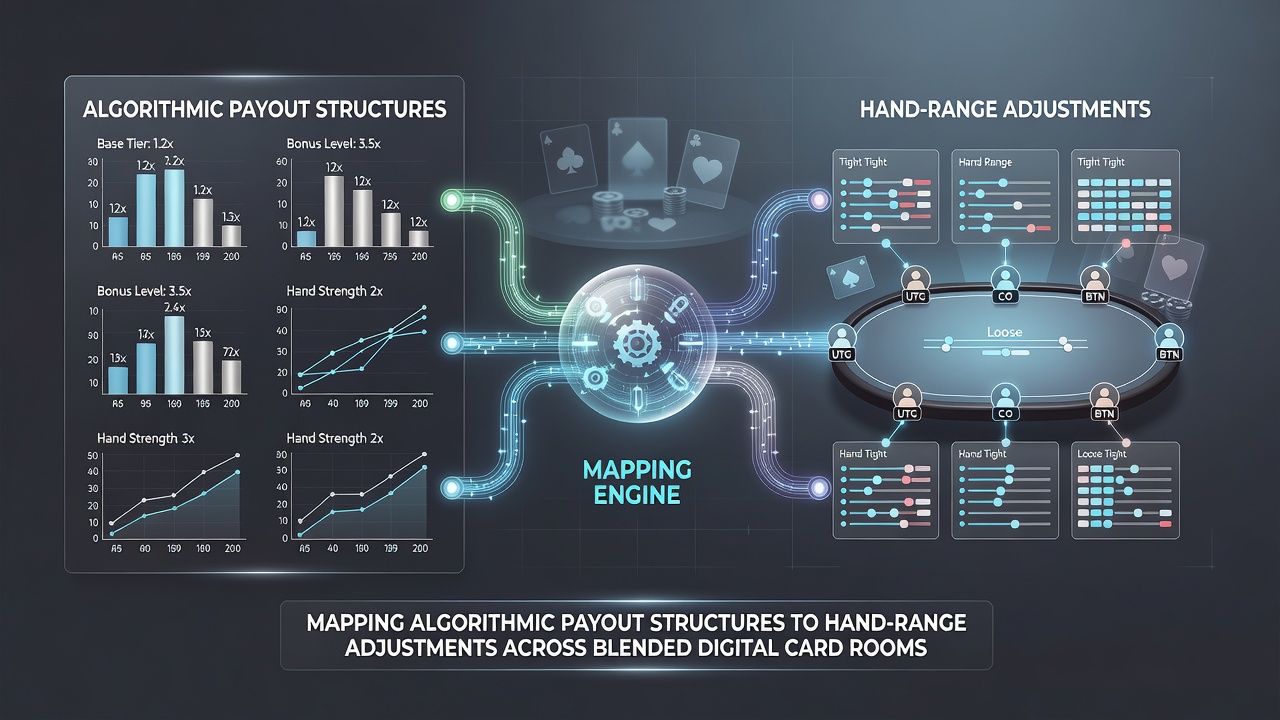
One documented implementation uses a layered neural network that ingests live odds, converts them into normalized payout vectors, and then applies those vectors as scaling factors on precomputed poker range charts. Data indicates this approach reduces decision latency compared with earlier rule-based systems, and platform operators in multiple jurisdictions have adopted similar architectures to handle concurrent poker and sports activity.
Regulatory and Compliance Considerations
Government agencies in several regions require that mapping algorithms preserve clear separation between sports risk exposure and poker game integrity, which means payout structures must undergo periodic review to prevent unintended carryover effects. Studies conducted by European research consortia show that transparent documentation of the mapping process allows regulators to verify compliance without restricting the real-time functionality that users expect from blended platforms. Those who audit these systems emphasize the importance of maintaining independent verification layers that isolate sports feed volatility from poker range outputs.
Future Development Patterns
Current development focuses on refining the granularity of payout-to-range mappings, with newer models incorporating additional contextual signals such as time-of-day betting patterns and multi-sport correlations. Platform data collected through mid-2026 suggests that increased precision in these mappings correlates with higher session retention rates across blended environments, although operators continue to test the limits of acceptable adjustment speed and magnitude. Academic papers published in the first half of the year outline potential expansions that could link payout structures to postflop decision trees, extending the current preflop focus into later streets.
Conclusion
Mapping algorithmic payout structures to hand-range adjustments represents an established operational practice within blended digital environments, and ongoing data collection continues to refine the precision of these connections. Regulatory oversight from diverse jurisdictions ensures the mechanisms remain auditable while supporting the real-time responsiveness that defines modern integrated platforms. As athletic wagering feeds and card room systems evolve, the documented relationships between payout matrices and poker ranges provide a measurable framework for future technical and compliance developments.